Support vs social networks research
What is a social support network?
A social support network is made up of friends, family and peers. Social support is different from a support group, which is generally a structured meeting run by a lay leader or mental health professional.
Mental health[edit]
People with low social support report more sub-clinical symptoms of depression and anxiety than do people with high social support.[17][50] In addition, people with low social support have higher rates of major mental disorder than those with high support. These include posttraumatic stress disorder,[51] panic disorder,[52] social phobia,[53] major depressive disorder,[54] dysthymic disorder,[55] and eating disorders.[56][57] Among people with schizophrenia, those with low social support have more symptoms of the disorder.[58] In addition, people with low support have more suicidal ideation,[59] and more alcohol and (illicit and prescription) drug problems.[60][61] Similar results have been found among children.[62] Religious coping has especially been shown to correlate positively with positive psychological adjustment to stressors with enhancement of faith-based social support hypothesized as the likely mechanism of effect.[63][64] However, more recent research reveals the role of religiosity/spirituality in enhancing social support may be overstated and in fact disappears when the personality traits of "agreeableness" and "conscientiousness" are also included as predictors.[65]
Social Support
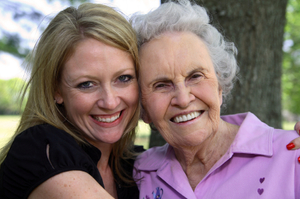
The term "social support" often appears in discussions of relationships. Social support means having friends and other people, including family, to turn to in times of need or crisis to give you a broader focus and positive self-image. Social support enhances quality of life and provides a buffer against adverse life events.
Social support can take different forms:
- Emotional (sometimes called non-tangible) support refers to the actions people take to make someone else feel cared for.
- Instrumental support refers to the physical, such as money and housekeeping.
- Informational support means providing information to help someone.
One of the earliest studies on the physical and psychological health benefits of social support was in 1905. Dr. Joseph Pratt, an internist from Boston, gathered a group of tuberculosis patients together to educate them about hygiene in relation to their illness. This "support group" provided early evidence of the power of psychological support in physical health and healing.
Manage stress:
Strengthen your support network

Introduction
Stress is a normal and unavoidable part of life — but too much stress can affect your emotional and physical wellbeing. According to APA’s 2015 Stress in America survey1, average stress levels today are slightly higher than they were in 2014. On a scale of 1 to 10 where 10 is "a great deal of stress" and one is "little or no stress," American adults rated their stress level at a 5.1 today, up from 4.9 in 2014. But worrisomely, a significantly greater percentage of adults reported experiencing a stress level of 8 or higher on the 10-point scale. Twenty-four percent of American adults reported this extreme level of stress in 2015, up from 18 percent the previous year.
Emotional support is an important protective factor for dealing with life’s difficulties. The 2015 survey found the average stress level for those with emotional support was 5.0 out of 10, compared to 6.3 for those without such support.
Loneliness has been associated with a wide variety of health problems including high blood pressure, diminished immunity, cardiovascular disease and cognitive decline.2 In fact, low levels of social support have even been linked to increased risk of death from cardiovascular disease, infectious diseases and cancer.3
The good news is that there are ways to seek out such support, and to nurture your supportive relationships.
The benefits of social support
As important as social support is, many Americans don’t feel they have access to this valuable resource. When asked if there is someone they can ask for emotional support, such as talking over problems or helping make difficult decisions, 70 percent said yes. However, more than half (55 percent) also said they could have used at least a little more emotional support.
In fact, experts say, almost all of us benefit from social and emotional support. And though it may seem counterintuitive, having strong social support can actually make you more able to cope with problems on your own, by improving your self-esteem and sense of autonomy.
You don’t need a huge network of friends and family to benefit from social support, however. Some people find camaraderie among just a handful of people, be they co-workers, neighbors or friends from their church or religious institution, for instance.
Yet social skills don’t always come naturally. Some people have trouble making social connections. Many others lose established connections due to life changes such as retirement, relocation or the death of a loved one. In any case, it’s possible to forge new connections to reap the benefits of a healthy support network.
Grow your support network
Cast a wide net. When it comes to your social supports, one size doesn't fit all. You may not have someone you can confide in about everything — and that’s okay. Maybe you have a colleague you can talk to about problems at work, and a neighbor who lends an ear when you have difficulties with your kids. Look to different relationships for different kinds of support. But remember to look to people you can trust and count on, to avoid disappointing, negative interactions that can make you feel worse.
Take advantage of technology. It’s nice to sit down with a friend face-to-face, but it isn't always possible. Luckily, technology makes it easier than ever before to stay connected with loved ones far away. Write an email, send a text message or make a date for a video chat. Don’t rely too heavily on digital connections, however. Some research suggests that face-to-face interactions are most beneficial.
Types of social support
Support can come in many different forms. There are four main types of social support:
Need for a like-minded community
You may wish to join a community or communities that you identify with, or make friends with people who share your values.
Need for specialized knowledge or expert opinion
You may wish to seek out extra help when you experience something that your existing support network isn’t familiar with. People with lived experience may be better able to provide empathy, support and understanding. The knowledge that we aren’t alone can also help you cope with feeling of blame or shame.
Formal support, like an education group or professional, may be helpful when you need highly specialized or technical information. For example, you may need specialized information if you or a loved one is diagnosed with a health problem.
Emotional support
This is what people often think of when they talk about social support. People are emotionally supportive when they tell you that they care about you. For example, if you separated from your partner or lost your job, a close friend might call every day for the first few weeks afterwards just to see how you are doing and to let you know that they care.
| Practical help
People who care about you might give you practical help such as gifts of money or food, help with cooking or child care, or help moving house. This kind of support helps you complete tasks in your daily life.
|
Sharing points of view
Some people help by sharing their point of view on a particular situation, or sharing how they might handle a situation. When you share points of view, you can develop a better understanding of a situation and the best way to handle it. For example, if you tell a friend about difficulties you are having with your teenage son, she may offer a point of view you hadn’t considered. This may help you to better address the situation with your child.
| Sharing information
It can be very helpful when family, friends or even experts give factual information about a particular situation. For example, a friend who recently married might provide information on the cost of their wedding, or a cancer survivor might provide information on different types of cancer treatments.
|
Advantages of Social Support Network
Stress can be better managed when your social support network is as strong as it can be. Here are the reasons why you should strive harder in strengthening your relationship with each identified member of your social support network:
Sense of Security
Your social support network has it all – information about your stressful situation, advice on how to manage stress, and even the silence and listening ear you need when you experience burnout. When you have them close by, you know you are secure even when stress seems to consume you.
Source of Strength
When you feel like giving up because of too much stress, your social support network is there to remind you of the abilities you possess to cope up with the stressful situation. They can personally help you with solving problems you can’t handle yourself.
Feeling of Belongingness
In times of stressful moments, you may feel alone and no one is there to help you. Calling a friend, your parents, your workmate or your church mate and talking about your feelings, emotions and thoughts will make you feel a lot better and will remind you that there’s always someone to comfort and support you.
Why Instagram Is the Worst Social Media for Mental Health
There were certainly some benefits associated with social networking. All of the sites received positive scores for self-identity, self-expression, community building and emotional support, for example. YouTube also got high marks for bringing awareness of other people’s health experiences, for providing access to trustworthy health information and for decreasing respondents’ levels of depression, anxiety, and loneliness.
But they all received negative marks, as well—especially for sleep quality, bullying, body image and FOMO. And unlike YouTube, the other four networks were associated with increases in depression and anxiety.
Previous studies have suggested that young people who spend more than two hours a day on social networking sites are more likely to report psychological distress. “Seeing friends constantly on holiday or enjoying nights out can make young people feel like they are missing out while others enjoy life,” the #StatusOfMind report states. “These feelings can promote a ‘compare and despair’ attitude.”
Social media posts can also set unrealistic expectations and create feelings of inadequacy and low self-esteem, the authors wrote. This may explain why Instagram, where personal photos take center stage, received the worst scores for body image and anxiety. As one survey respondent wrote, “Instagram easily makes girls and women feel as if their bodies aren’t good enough as people add filters and edit their pictures in order for them to look ‘perfect’.”
ther research has found that the more social networks a young adult uses, the more likely he or she is to report depression and anxiety. Trying to navigate between different norms and friend networks on various platforms could be to blame, study authors say—although it’s also possible that people with poor mental health are drawn to multiple social-media platforms in the first place.
To reduce the harmful effects of social media on children and young adults, the Royal Society is calling for social media companies to make changes. The report recommends the introduction of a pop-up “heavy usage” warning within these apps or website—something 71% of survey respondents said they’d support.
It also recommends that companies find a way to highlight when photos of people have been digitally manipulated, as well as identify and offer help to users who could be suffering from mental health problems. (A feature rolled out on Instagram last year allowing users to anonymously flag troublesome posts.)
The government can also help, the report states. It calls for “safe social media use” to be taught during health education in schools, for professionals who work with youth to be trained in digital and social media and for more research to be conducted on the effects of social media on mental health.
The Royal Society hopes to empower young adults to use social networks “in a way that protects and promotes their health and wellbeing,” the report states. “Social media isn’t going away soon, nor should it. We must be ready to nurture the innovation that the future holds.”
Social networks and mental health: on overview.
Abstract
Research has shown that social networks can act as social support systems to promote mental health and buffer psychological stress. In this selective review the authors illuminate patterns and characteristics of social networks that maintain health and help prevent illness, explore the relationship between social networks and the course and outcome of treatment for mental illness, and describe clinical network interventions that have been used to facilitate inpatient care and maximize performance of ex-patients in the community. The authors also discuss the implications of research findings for mental health practice.
Subscribe to Useful Communities
The tip above was applied to the amount of time you spend on the Internet websites. This one will refer to the quality of social media activity.
Instead of viewing silly pictures, subscribe to any interesting communities on Facebook, where links to useful articles and researches are published. This groups may be related to science, literature, art or self-development.
Social networks aggregate the information from the whole Internet. This is related not only to news about celebrities, but also to useful and educational information. This is a very good opportunity, use it. Use social media for your own benefit, not for your own damage!
Pay more attention to reading of informative materials, to viewing of interesting links, to participation in discussions, instead of clicking the “Like” button and constant updating of news feeds.
Could Facebook be used to improve mental health and well-being?
Although many studies point to the negative impacts of social media on mental health and well-being, some researchers say they could have the opposite effect. Social networking sites could be a useful tool in identifying individuals with mental health issues.
Last year, Medical News Today reported on a study from researchers at the University of Missouri, which claimed that Facebook activity may be an indicator of a person's psychological health.

Some studies have suggested that social media use may even improve mental health and well-being.
The team found that people who shared fewer pictures on the site communicated less frequently, had a longer profile and fewer Facebook friends, and were more likely to experience social anhedonia - the inability to encounter happiness from activities that are normally enjoyable, such as talking to friends.
Another study, from the University of California San Diego (UCSD), suggests that using social media may even spread happiness. The research team, led by James Fowler of the School of Medicine at UCSD, found that happy status updates encourage other users to post happy status updates themselves.
"Our study suggests that people are not just choosing other people like themselves to associate with but actually causing their friends' emotional expressions to change," says Fowler.
"We have enough power in this data set to show that emotional expressions spread online and also that positive expressions spread more than negative."
In fact, the researchers believe that this viral spread of happiness is so strong that if magnified, it could trigger an "epidemic of well-being."
"If an emotional change in one person spreads and causes a change in many, then we may be dramatically underestimating the effectiveness of efforts to improve mental and physical health."
Overall, it appears that the exact effects of social media on our mental health and well-being remain to be seen. But one thing is certain; our use of social networking sites is unlikely to fade anytime soon.
Strengthening & Building Communities
Research shows that SNS can facilitate a sense of connectedness, community and belonging.
The opportunity to express oneself creatively, explore and experiment with identity and the
production − as well as consumption − of online content is central to the way that SNS
Literature Review: The Benefits of Social Networking Services
19 Research Report
strengthens and builds communities (Coleman and Rowe 2005; Montgomery 2007). People use
these services regularly because:
“...of the experiences they find there, not because of the spaces themselves… The
ongoing attraction… is the community – the people that use the space.” (Johnson, Levine
& Smith 2009)
According to Robert Plan an online community can be defined as „a collective group of entities,
individuals or organisations that come together either temporarily or permanently through an
electronic medium to interact in a common problem or interest space‟ (Plan, 2004:54). With
functions such as Facebook‟s „Groups‟ and „Fan‟ pages, or Twitter‟s „hash tags‟, SNS allow young
people to connect with others over shared interests.
Wellbeing
While research specifically on SNS use needs to be conducted, it has been argued that SNS
functionality has a key role to play in strengthening social connectedness, self-efficacy, general
knowledge and/or life skills and is critical for the promotion of young people‟s overall mental
health and wellbeing (Boase et al 2006; Burns, et.al. 2007; Burns et.al, 2008; Burns & Morey,
2009). The personalisation of SNS profiles is not only important to young people‟s relationship
with others but is positively associated with the individual‟s sense of self-efficacy or personal
agency (Notley & Tachhi, 2005). Young person‟s sense of „ownership‟ over the online space also
enhances their sense of empowerment and accomplishment which reinforces the sense of
belonging and attachment to community (Third and Richardson, 2010).
There is a demonstrated positive relationship between young people‟s use of social networking
services and self-esteem (Valkenburg, Peter and Schouten, 2006). It is also argued that a sense
of community and belonging has the potential to promote young people‟s resilience, giving them
the ability to successfully adapt to change and stressful events (Oliver et al 2006:1). This is an
area that requires more large-scale research, particularly considering the over-emphasis within
the public realm on the negative psychological effects of SNS and social media. However, overal l,
it appears that the social connections developed and fostered through SNS play an important role
in promoting young people‟s wellbeing (Berson 2003; Campbell 2005; Gross, Juvonen & Gable
2002)
A SOCIAL NETWORK DESIGNED TO COMBAT DEPRESSION
SOCIAL NETWORKS ASPIRE to connect people, which is a noble but naive goal. When we uncritically accept connection as a good thing, we overlook difficult, important questions: Are some forms of virtual communication more nourishing than others? Might some in fact be harmful? Is it possible that Facebook, for instance, leaves some people feeling more lonely? No one knows for sure. We tend to build things first and worry about the effects they have on us later.
Robert Morris is taking the opposite approach. Starting with the desired effect of helping people deal with depression, he developed Panoply, a crowdsourced website for improving mental health. The site, which was the focus of his doctoral thesis at MIT Media Lab, trained users to reframe and reassess negative thoughts, embedding an established technique called cognitive behavioral therapy in an engaging, unthreatening interface. After a study confirmed the site's effectiveness, Morris formed a company and is now working on turning the idea into a polished consumer app.
Like other social networks, Panoply will take up that noble goal of connection, but in a more specific, structured way. As software goes, it's something of a novelty—a product that aims to enrich lives through precise, clinically-proven means, rather than merely assuming enrichment as a byproduct of its existence.


Social media and young people's mental health
n this blog, Brayan Herrera, a year 12 student who has been on placement with Mental Health Foundations Policy and Research team from Haggerston School, East London, as part of the Inspire Initiative, discusses the positive and negative impacts of social media on young peoples mental health.
Social media has dramatically changed the way we communicate. We no longer need to wait for newspaper updates, but rather learn from those on our social media feeds about the issues that are most important or appealing to us.
Even more importantly, social media has proven its power in motivating people to action as well as a strong resource to influence social, political and economic policies.
Social media is a powerful tool for young people; it provides a platform for our voices to be heard and enables us to become active citizens and to voice our opinions on the matters that affect or interest us. It also has the power to bring together voices of concern about particular issues – for example when Rachel Beckwith’s birthday wish came true and she was able to raise $1,265,823 to help young children in Africa to have clean water: she was able to raise awareness and convince people to donate to the charity.
This shows the real benefits of social media as it allowed the distribution of an idea that was then recognised by new audiences that might otherwise have missed out. Social media, as well as the internet more broadly, has helped young people to explore new ideas as well as to build resilience as they learn to recognise and manage risks.
While social media can offer many benefits to society, and to young people more specifically, it can be argued that it has also transformed our culture into one of over-sharing. We should ask the question, what impact does this have on our mental health?
Nowadays, we only look at how many pictures we can post or what is the next thing we should post but we don’t look at the effect of social media on our mental health. Taking Facebook and Instagram as examples, they allow us to present our own filtered sense of reality, showing only what we want to show.
This can lead to a person critically comparing their life with other people's and using others' posts as measures for successes and failures in their own life. The impact of this could be catastrophic feelings of low self-esteem, resulting in negative 'I am' statements, such as 'I will never be able to be like that person', or 'I could never do that'.
Low self-esteem is not the only result of the high level of social media use. There has also been a study conducted by psychologist Dr Paula Durlofsky, which was done with the aim of digging into how to establish a healthy balance between real-time relationships and virtual connections. This study demonstrated a correlation between social media use and depression.
Body dysmorphia is another area, which has been affected by social media. A study conducted by Dr Bryony Bamford indicated that high amounts of time spent on Facebook may lead to body image insecurity, which can also lead to depression.
So are you being adversely affected by social media? Here are some signs to look out for:
- Low self-esteem.
- Feeling low when you see other people's images and lifestyle.
- Envy of others people lives - wishing your life was like someone else's.
- Finding social media as your first and only choice of activity done for enjoyment.
- Not having as many face to face conversations with your relatives and friends and feeling disconnected.
- Being unable to do anything without feeling you need to share it online.
If you think your mental health is being affected by social media, below are three examples of the available support.
Pros of Using Social Media
- Connects People – Most users cite “connecting with friends and family” as a primary reason for using sites like Facebook.1 Feeling connected and having a sense of belonging has significant mental health benefits.
- Entertainment – Social media can serve as a quick respite from the stress of the real world. Keeping up with interests and consuming media are ways users relax and unwind with social media.
- Can Reduce Health Problems – Having a large group of “friends” online can have a contagion-like effect, which means the quality of life can improve when healthy physical and mental lifestyles are encouraged in online circles. For example, groups dedicated to helping one another quit smoking.
- Empowers Individuals to Make Social Change – There have been numerous instances where one person has sparked a change within their community because of the mass reach and instant connectivity of social media.
- Senior Citizens Feel More Connected – People 65 years and older, which has been one of the fastest growing social media demographics during the past 10 years, feel happier and more connected to society when they use social media than they would otherwise.
Cons of Using Social Media:
- Comparing Ourselves with Others is Unhealthy – Spending a lot of time looking at others’ “highlights” online naturally leads to thinking of ourselves as better or worse off, which links to jealousy and more severe depressive symptoms.
- Sedentary Lifestyle – It shouldn’t come as a surprise that looking at your phone or sitting at your computer for long periods of time can lead to a more sedentary lifestyle, which can have negative effects on your overall physical health.
- Triggers More Sadness – Facebook has been linked to less overall satisfaction with life, likely due to feelings of social isolation. Additionally, more time spent on sites like Facebook and Instagram has been shown to increase these feelings.
- It Can Be Addictive – Research has shown users can suffer from addictive behavior using social media and show psychological symptoms of withdrawal when they’re unable to log on.
- Cyber Bullying – Social media connects us all but it isn’t always a good thing. In one study, 52% of students reported being cyberbullied, with Facebook accounting for the bullying channel 84% of the time.
- https://offeringhope.org/social-media-affect-mental-health/
7 Mental Health Tips for Social Media Managers
Control Your Social Media Feeds
- Just like it’s okay to take social media breaks, it’s okay to keep your feeds as positive and happy as they can be, if that’s what you need.
- If you’re starting to feel like social media is affecting your mental health, do a quick audit of what your personal feeds look like before you take a break.
- Here are some ways to curate a social media feed that is right for you:
- Unfollow accounts that don’t make you feel good.
- If you’re comparing your body, house, or lifestyle to those perfect Instagram influencers, and it’s making you feel bad, you can unfollow them!
- Make sure that the people and brands you follow on Instagram are aligned with what’s important to you, and you’re getting value or positivity from following them.
- If you can’t unfollow someone because of work or friendship, use the mute button on Instagram or Twitter to hide them from your feed, and you can “unfollow” someone on Facebook while still remaining friends with them, too.
Mute keywords that trigger or upset you.
- This feature is only available on Twitter, but if there’s something that makes you constantly feel drained or depressed, it’s okay to not see it.
- You can mute keywords on Twitter, which hides particular words, phrases, usernames, emojis, or hashtags from your timeline. You can choose to mute them “forever” or just for a limited time, which is especially helpful during world events or news cycles that can be hard to read.
Follow inspiring, happy accounts that make you feel good.
- Remember, you’re in control of your feed! And just like you unfollowed any accounts that made you feel bad, it’s important to add in some accounts that make you feel good too.
- You could follow funny meme accounts, motivational speakers, stunning travel accounts, or even accounts that are just inspirational quotes.
- Personally, I found that by adding in some body positivity babes to my Instagram feed, it made me feel a lot more confident about myself.
And by following yummy, healthy food accounts, I noticed that it really would inspire me to eat better, and I would collect different healthy recipes in a “saved” collection on Instagram.
- But it doesn’t have to be sunshine and rainbows all the time, and following other people who are open and honest about their mental health can make you feel less alone, too.
Control your comments.
- As a social media manager, having to hide, block, or deal with negative online comments all the time can negatively affect your mental health. Instagram is making it easier to avoid bullying and trolls with their comment filtering feature.
- You can block certain words or phrases on Instagram, so any comments including those words won’t show up on your posts. You can also turn off commenting on specific Instagram posts, too, so you can post without having to hear your followers’ opinions or negativity.
- Set intentions.
- If you’re feeling like social media is taking a toll on your mental health, setting intentions for your social media time may help. Instead of logging on and endlessly scrolling, think about what exact tasks you need to accomplish and use your social media time wisely.
- “I prepare for engaging online by acknowledging the potential for harm, taking a moment to ground and centre myself and keeping my time online to a minimum. Get in, do your work, get out,” explains self-care advocate Rachel Ricketts.
- “Taking the extra time to be intentional with when and how I engage online, and getting honest with myself about it’s impact, is step one to managing my mental health.”
Set Self-Care Goals
- When life feels stressful, it’s important to take care of yourself. Sometimes it can be hard to remember to do simple things like drink water, take your medicine, or go to bed on time.
- But it’s important you make time to do these simple things!
- The free app Aloe Bud helps you track your self-care goals, and will send you gentle reminders that help you achieve your goals, without making you feel bad for not completing them yet.
Being intentional and setting time aside to focus on a new hobby, exercise, hanging out with friends, or just taking care of yourself can help you find a better balance to all the time spent on social media.
Social Media Created a Mental Health Community
Not only was I able to respond to the comments, but people were replying to each other, offering advice and support to one another. It was amazing to see how everyone came together, united by our battle with mental illness.
The community that formed because of my videos has allowed me to share resources as well. I can recommend articles or books and inform people about websites that provide information about mental health treatments and others’ testimonies detailing their own journeys.
Social media gave me an opportunity to open up about my own struggles with mental health, and it has helped many other people feel understood and encouraged. I hope that by spreading mental health awareness through different social media platforms, people can find hope and support.
What are ways you use social media to help your mental health? I would love to hear your thoughts.